
Miles Through Time Exhibits
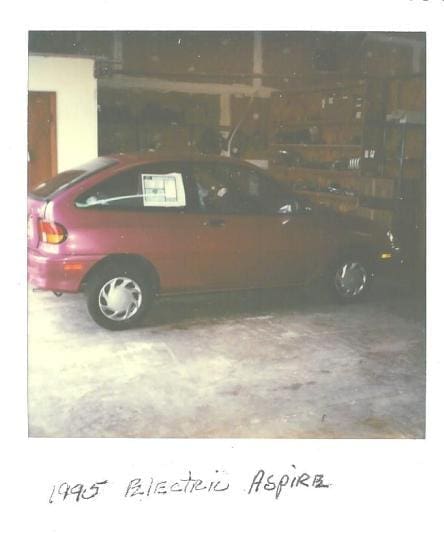
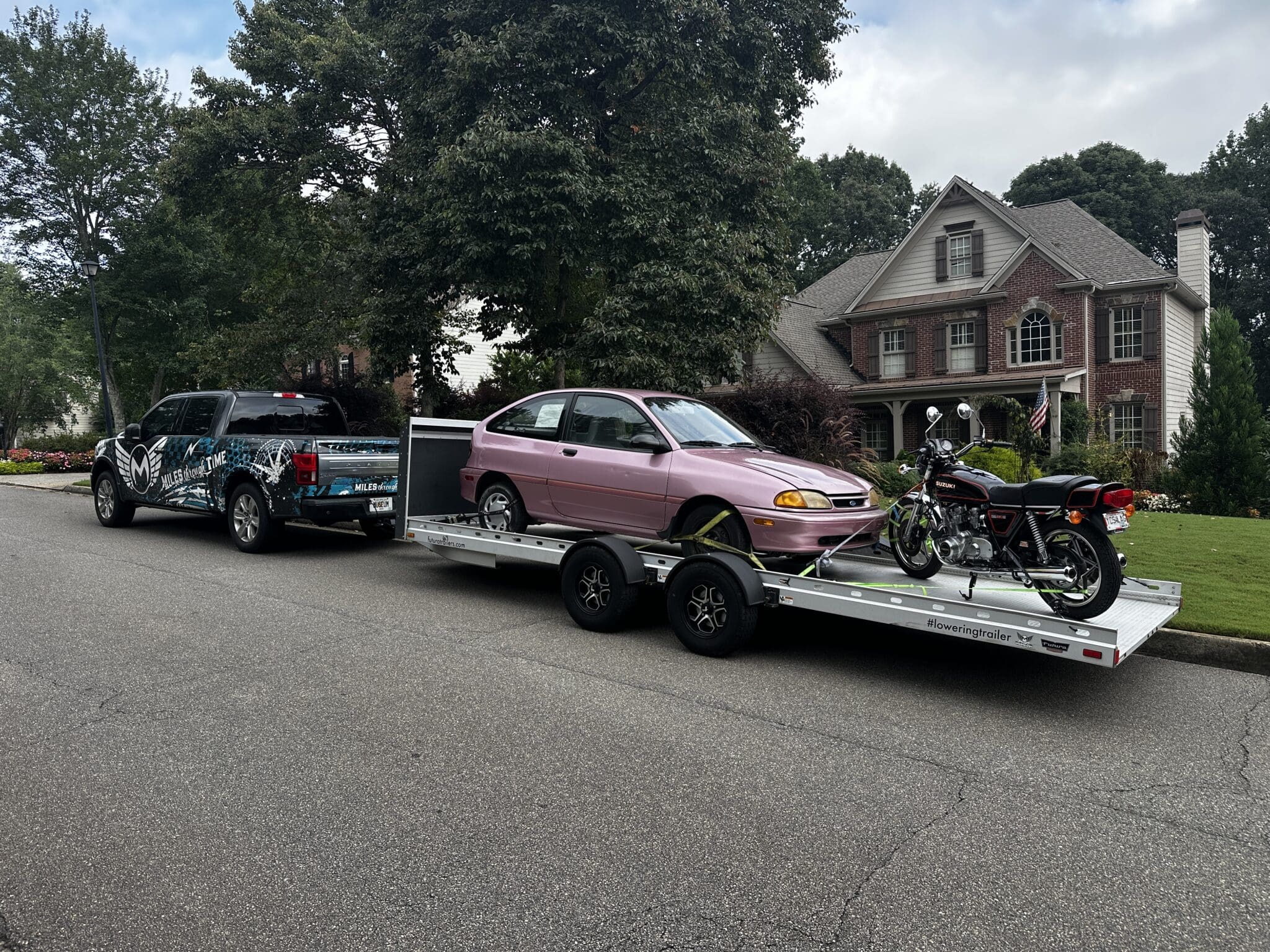
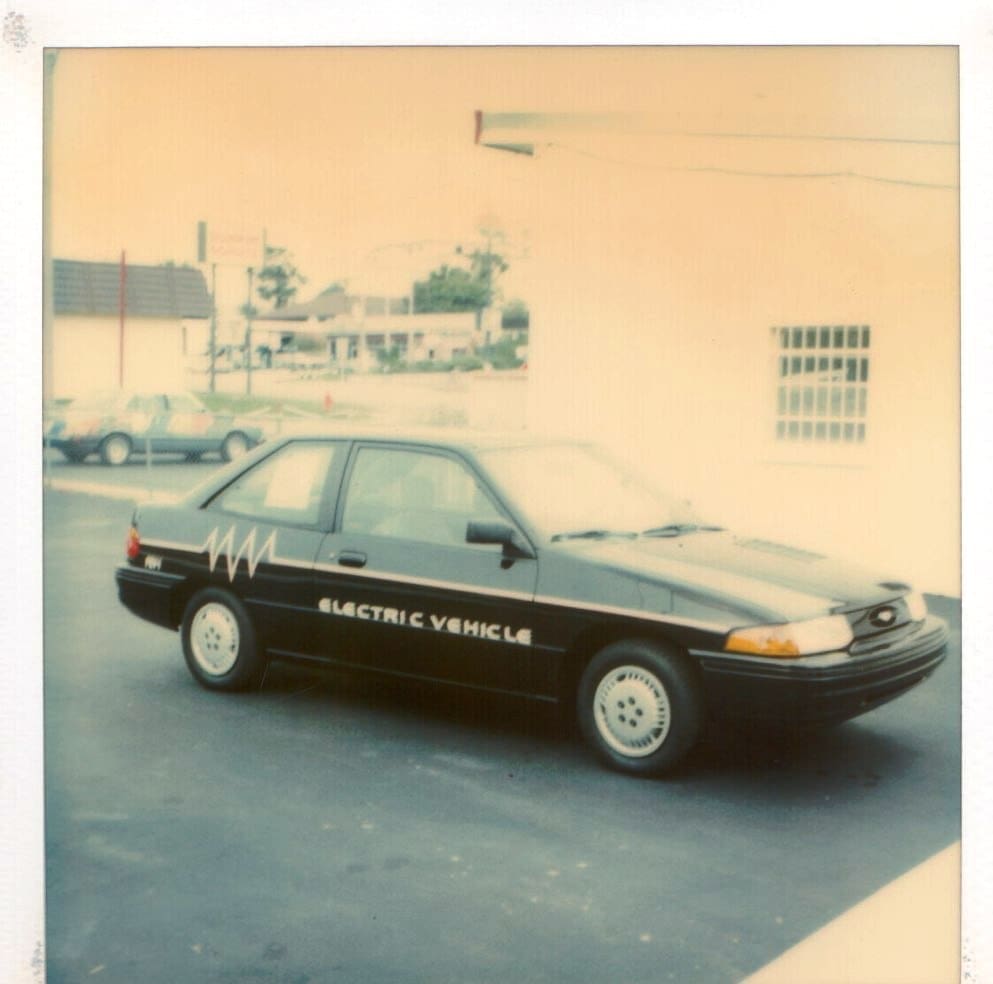
1994 Ford Apsire Mathes Electric
Make/Model: Ford Apsire Electric
Year: 1994
Owner: Donated by The Mathes Family
Original Price: $16,600
1994 Ford Aspire Electric: The Rare Ocala-Built EV Before Its Time
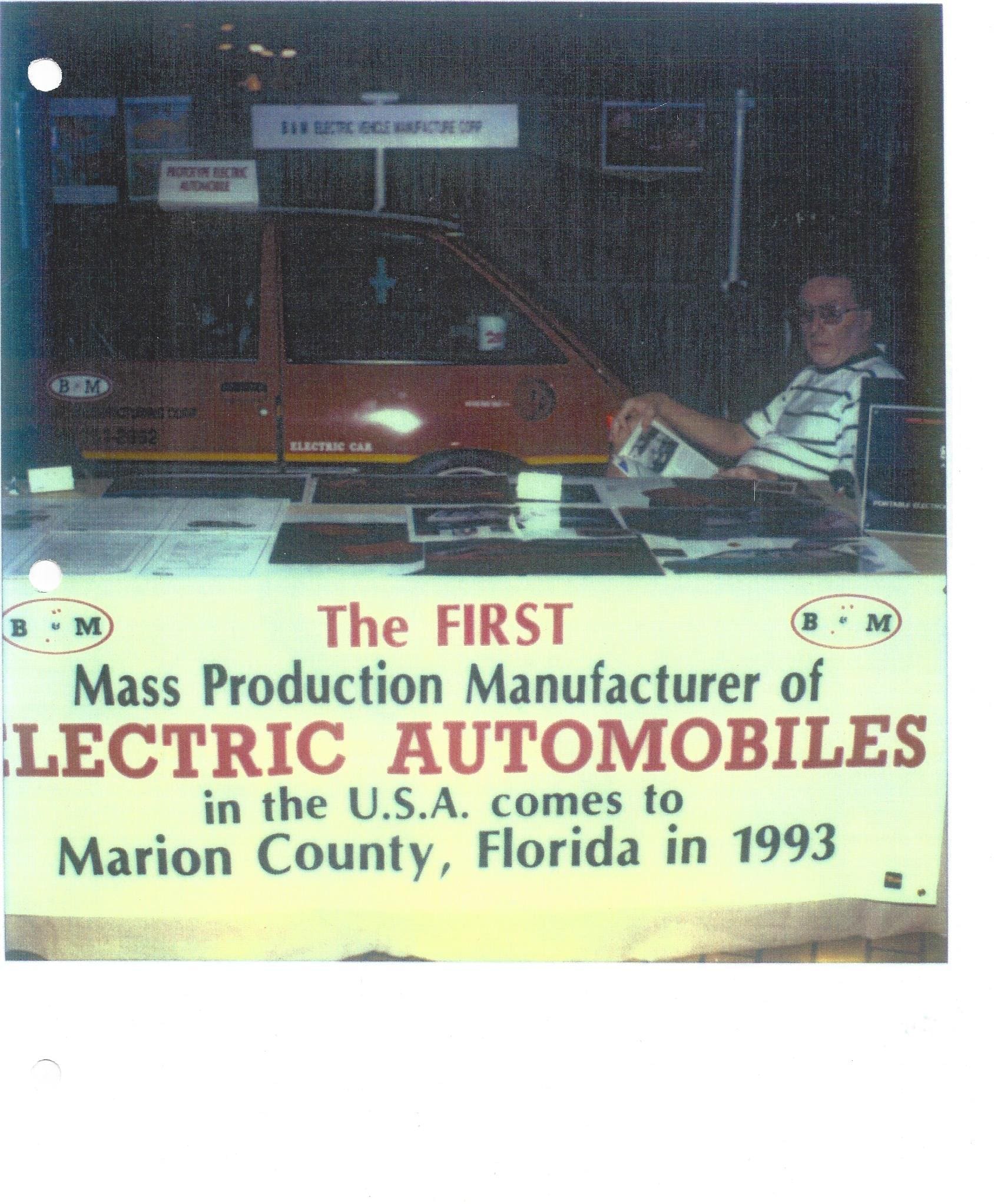
Long before electric vehicles became common on American roads, Barry V. Mathes, Sr. was already working to build the “car of the future” in Ocala, Florida. His company, Mathes Electric Motorcar Corporation, was organized to manufacture urban electric vehicles by converting factory-built gasoline cars into practical electric commuters. The 1994 Ford Aspire Electric recently donated to the Miles Through Time Automotive Museum by the Mathes family is an important piece of that story. This car is number 10 of only 10 electric conversions completed by the company.
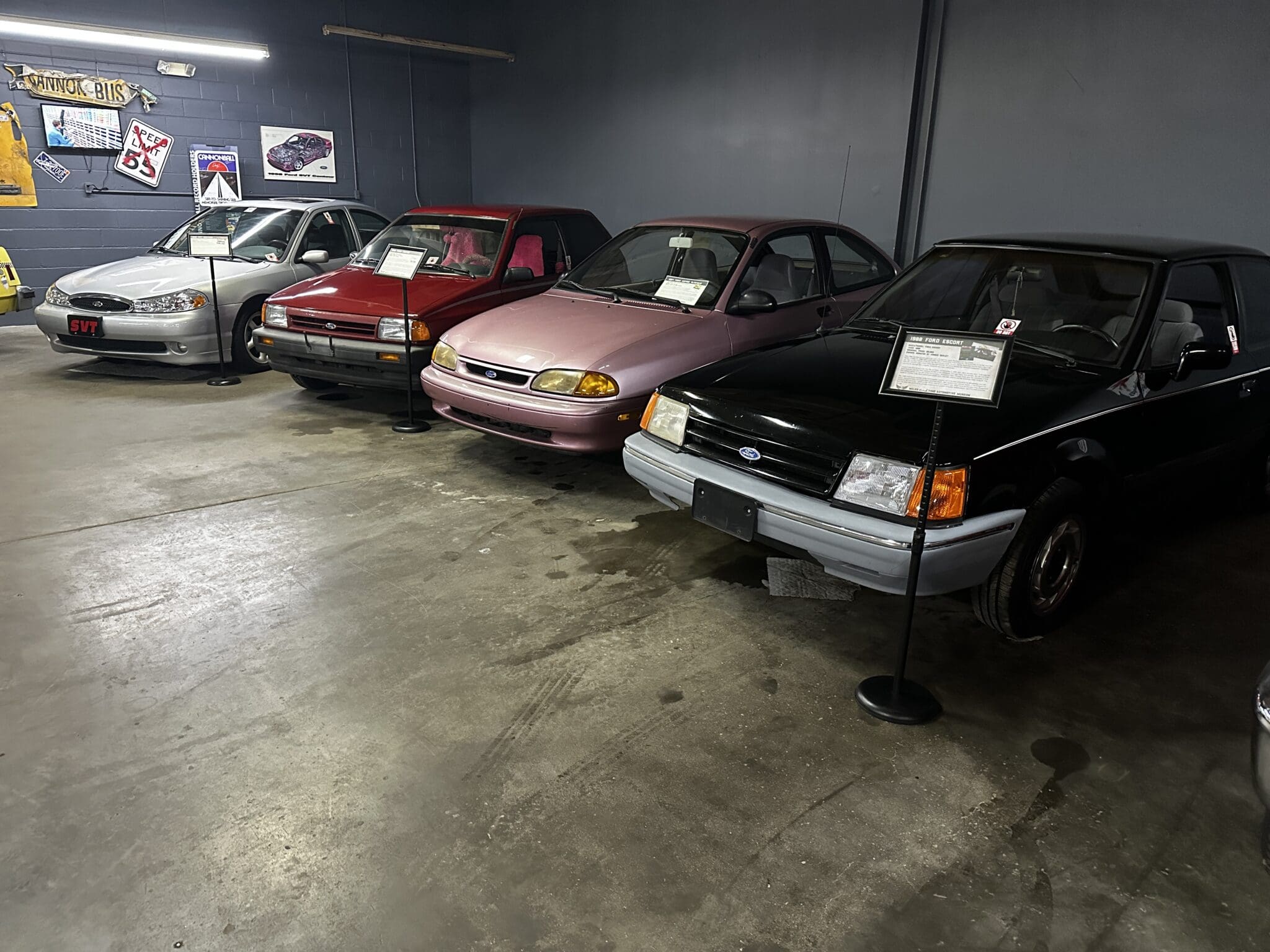
A Florida Company With an Electric Vision
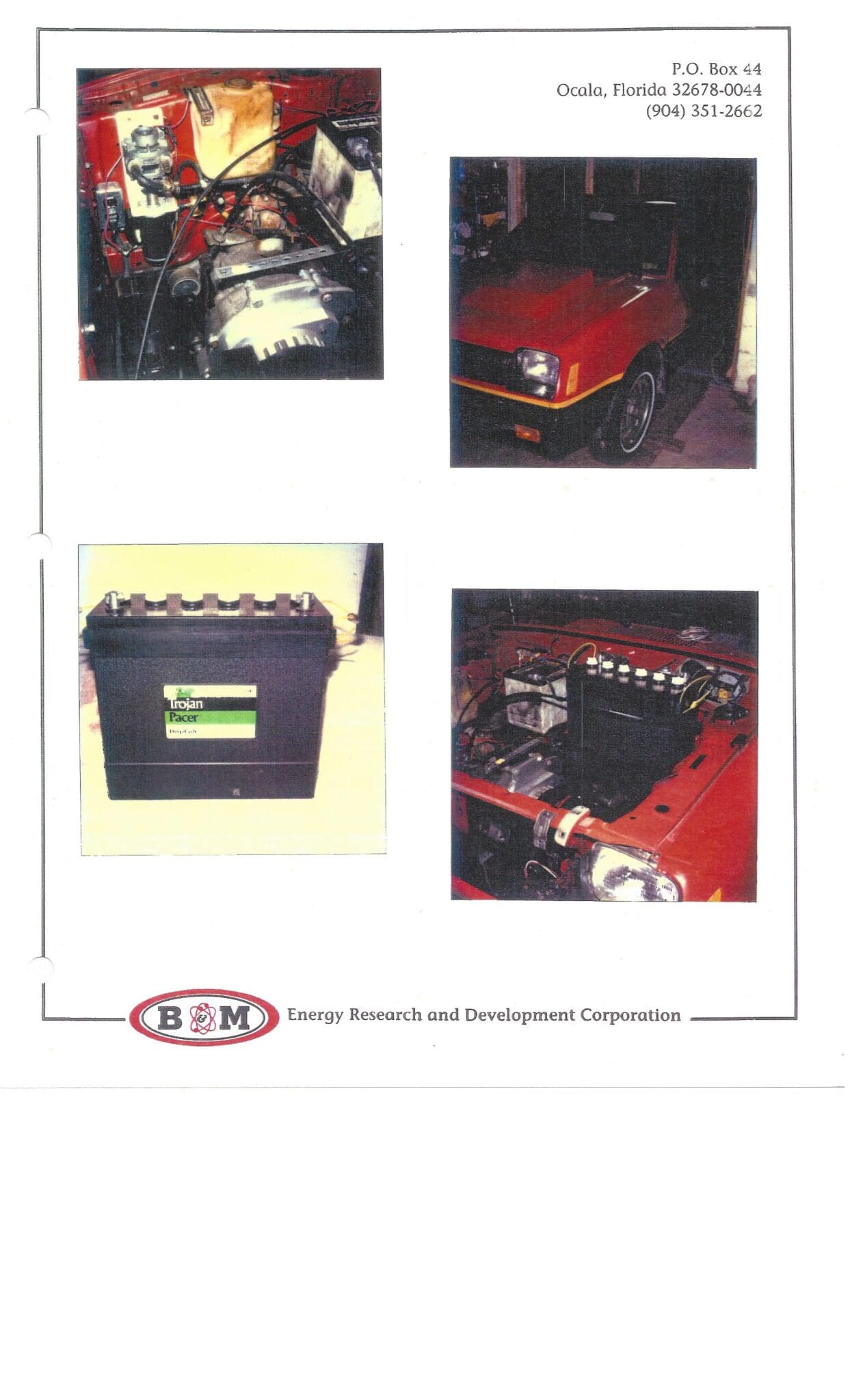
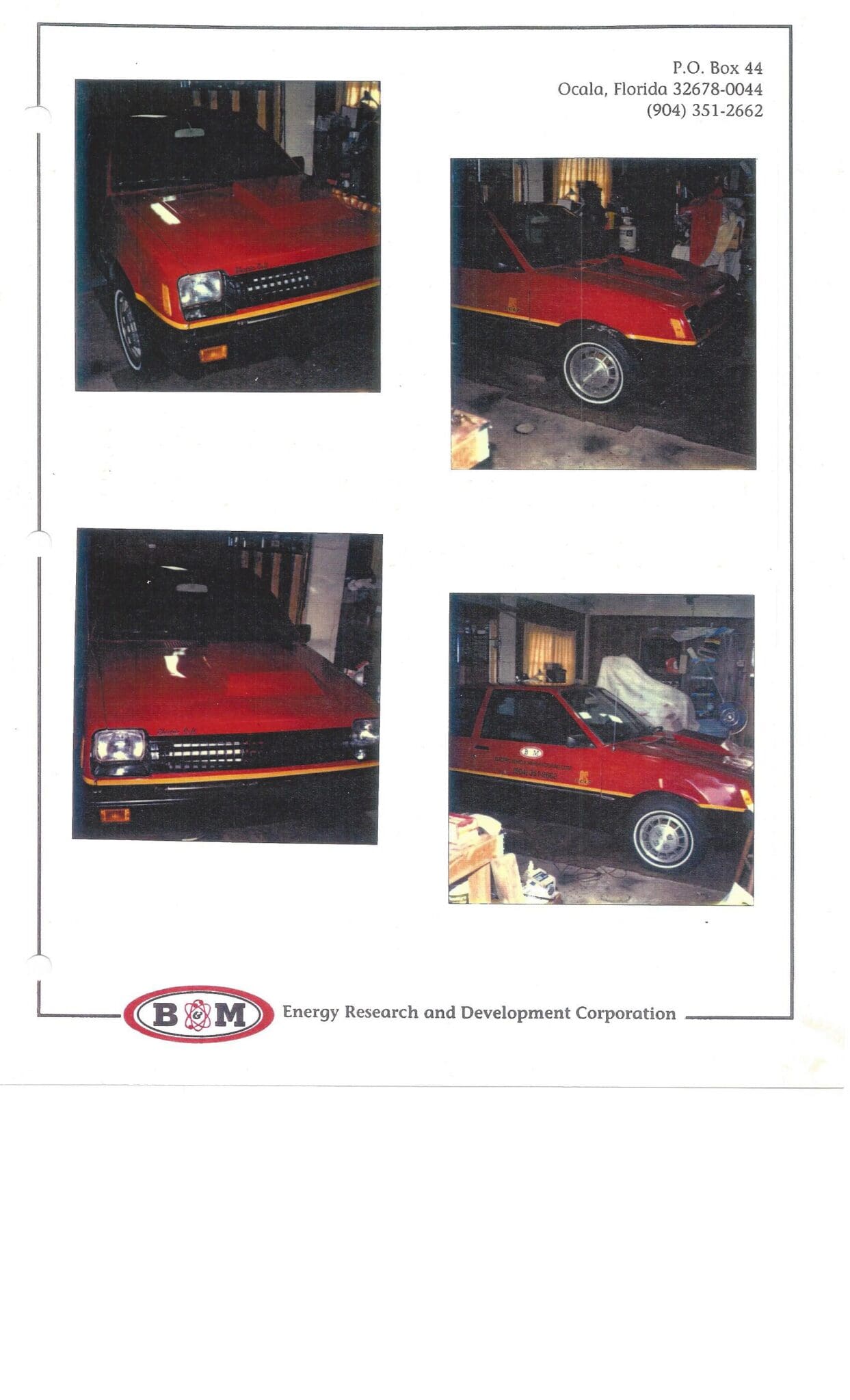
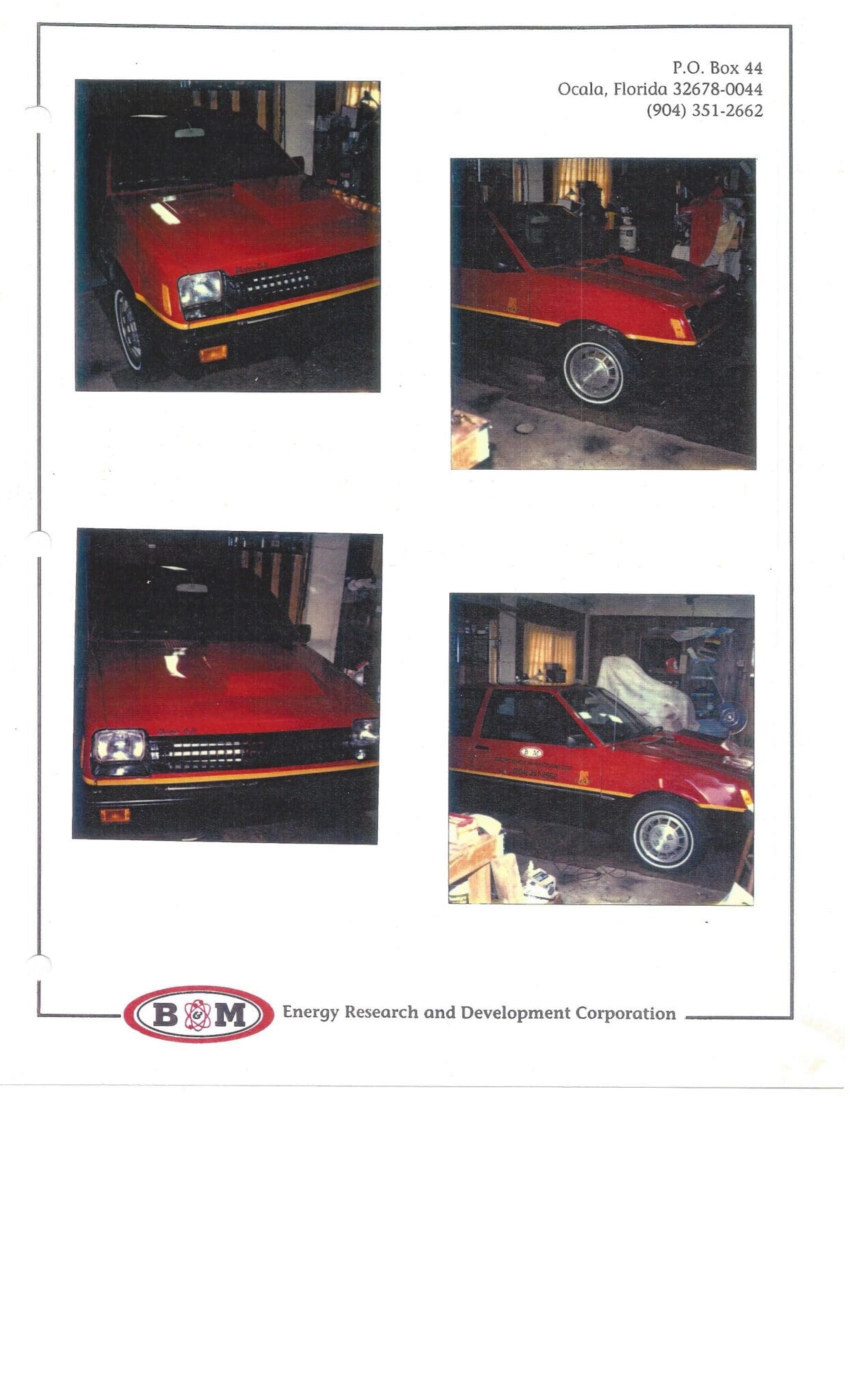
Mathes Electric Motorcar Corporation was built around Barry Mathes’ decades-long interest in electric transportation. Company documents note that Mathes had spent more than 20 years researching and developing electric vehicles before forming the corporation. His early work included a 1968 Volkswagen conversion, followed by a Chevette and an AMC Pacer. Those experiments eventually led to a 1981 Dodge Colt that was operated and tested extensively in Ocala.
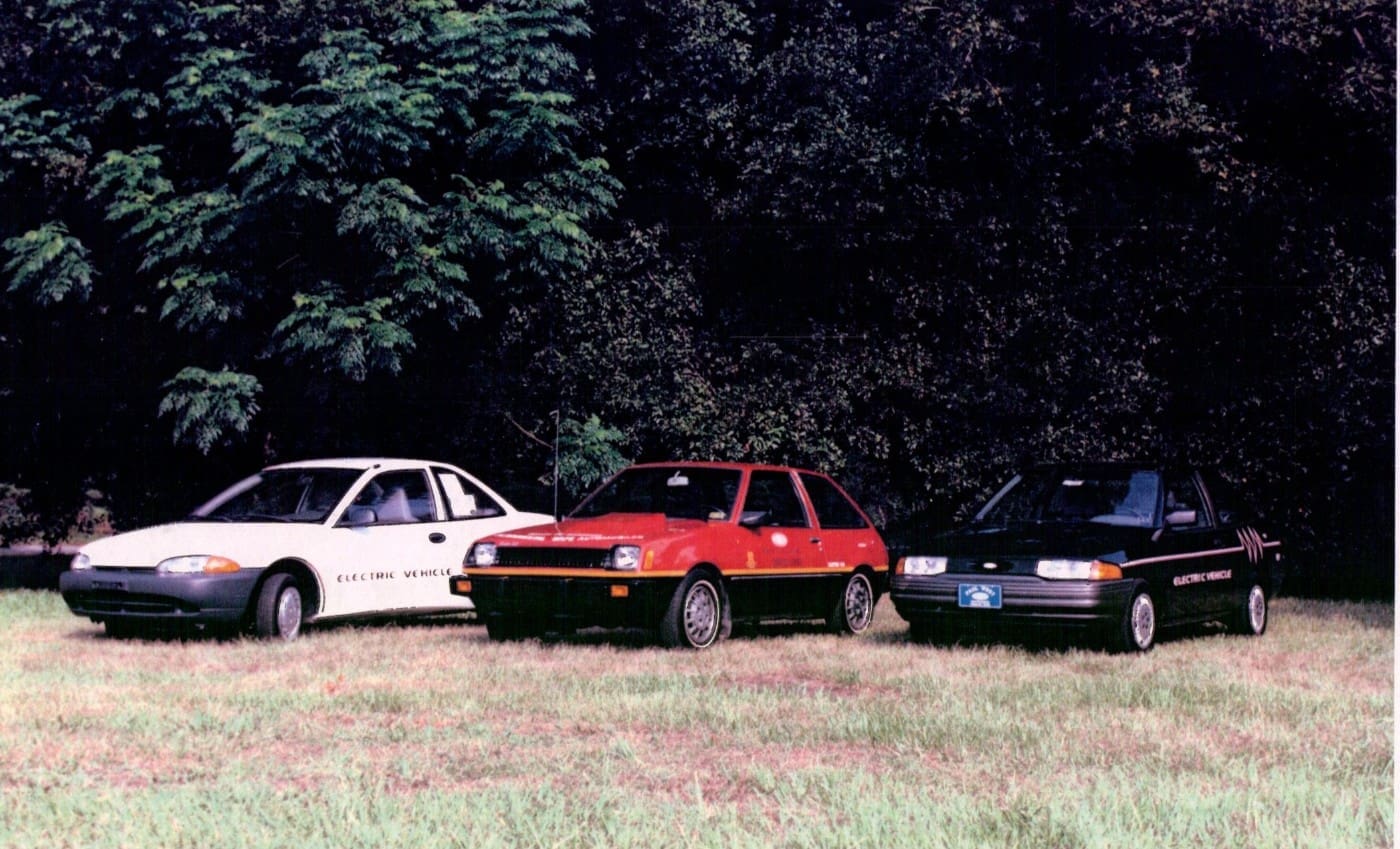
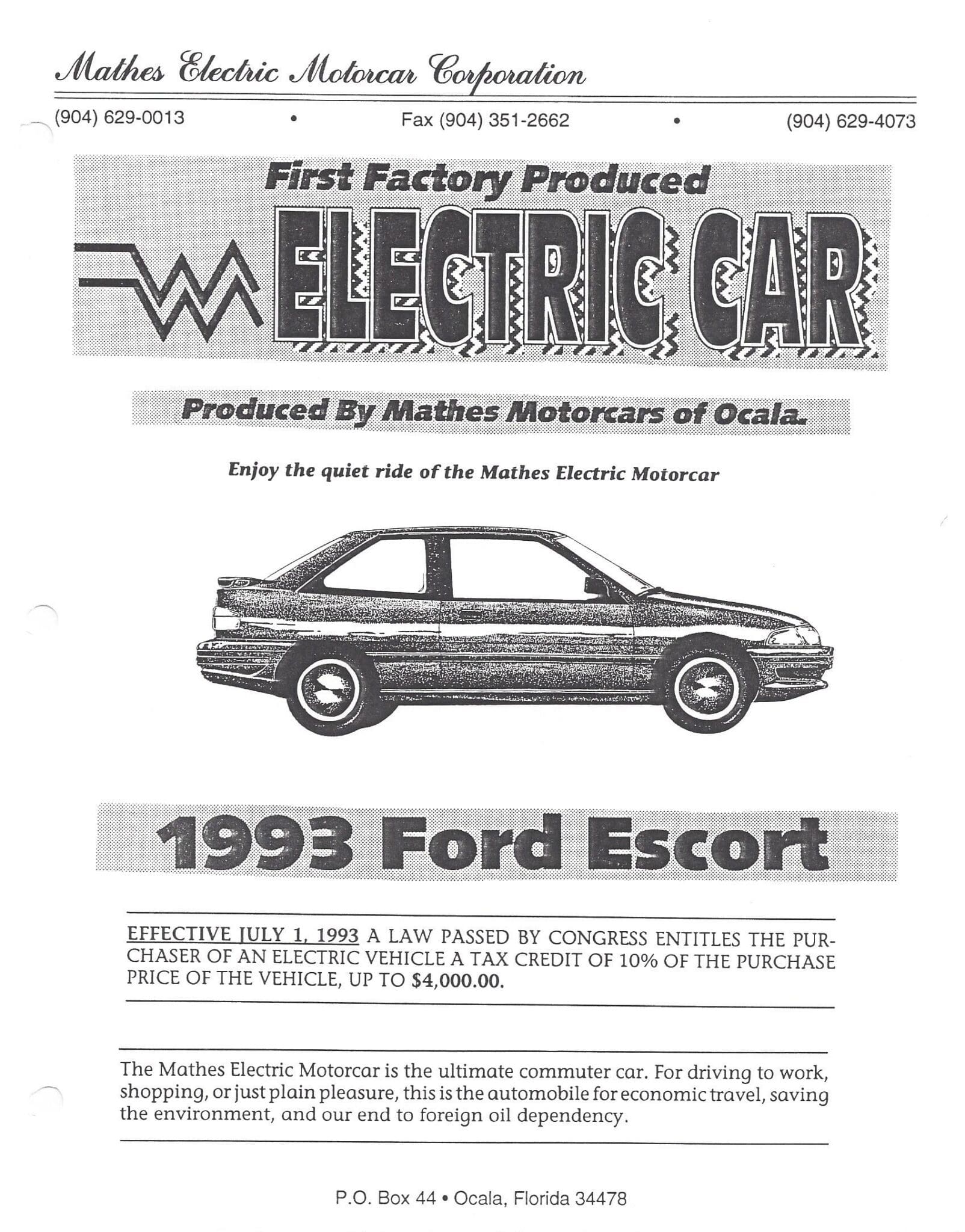
By the early 1990s, Mathes Electric Motorcar Corporation was working to convert several models that were originally equipped with gasoline engines. The company’s materials mention Ford Escorts, Ford Aspires, and a Mitsubishi Mirage as part of the program. At a time when most Americans still thought of electric vehicles as experimental or impractical, Mathes was trying to make them usable, affordable, and suitable for everyday in-town driving.
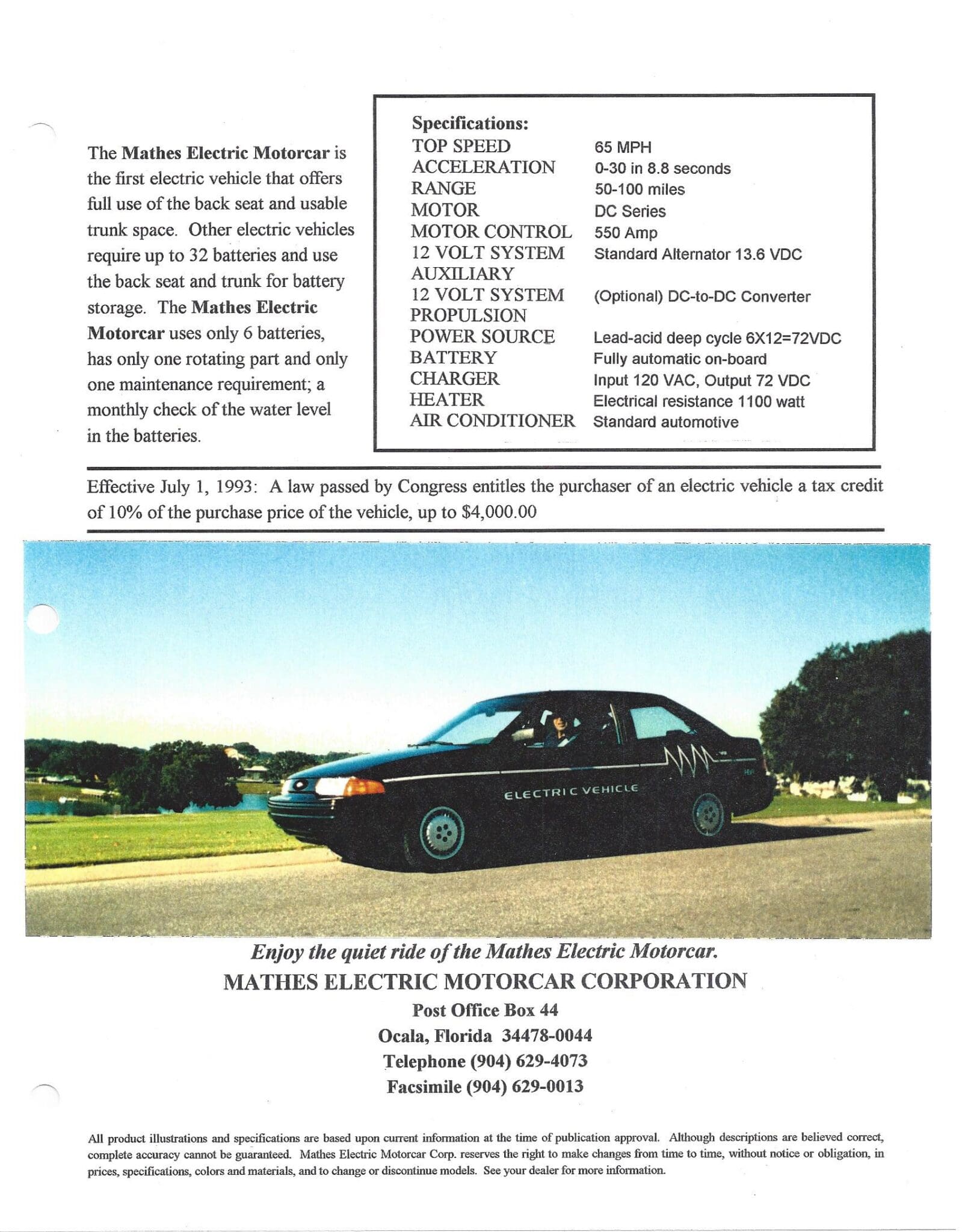
The company promoted its vehicles as quiet, economical commuter cars. One period brochure described the Mathes Electric Motorcar as “the ultimate commuter car” for driving to work, shopping, or everyday use while helping save fuel and reduce dependence on foreign oil. That message sounds modern today, but Mathes was making that case in the early 1990s.
Built for Practical Use
One of the biggest challenges with early electric conversions was battery placement. Many conversions required large numbers of batteries that took up the back seat, trunk, or cargo area. Mathes Electric Motorcar Corporation promoted a different solution. The company stated that its vehicle used only six batteries while preserving full use of the back seat and usable trunk space.
That practical approach is what makes this 1994 Ford Aspire conversion especially interesting. A handwritten note with the car explains that the Aspire retained seating for five plus a complete cargo area, with no space compromised by the installation of six marine batteries. The car was built for in-town driving and could be charged through a standard 110-volt outlet located where the gas cap would normally be.
Company literature listed specifications that included a top speed of 65 mph, a range of 50 to 100 miles, 0 to 30 mph acceleration in 8.8 seconds, a 550-amp motor control, a 72-volt lead-acid battery system, and a fully automatic onboard charger. The sales material also emphasized low maintenance, noting that the car had only one rotating part and required only a monthly check of the water level in the batteries.
The Aspire: Number 10 of 10
The Ford Aspire donated to the museum is not just another electric conversion. It is number 10 of only 10 vehicles converted by Mathes Electric Motorcar Corporation. Documentation identifies the car as a Ford/Mathes Electric Aspire, showing its transformation from a gasoline-powered Ford into an electric vehicle through the Ocala company.
The original Ford Aspire carried an MSRP of $8,240. The Mathes electric conversion added $7,990. Optional air conditioning was listed at $1,170, and the AM/FM stereo added $300, bringing the total shown on the original paperwork to $17,700. That price placed the car in a very different category from the standard Aspire, but it also reflected the cost of early electric vehicle development before mass production, modern battery technology, and today’s EV infrastructure.
A certificate of origin dated December 4, 1995 lists the vehicle as an Electric Aspire 3-door, with the make shown as Ford/Mathes. That document is especially important because it helps preserve the car’s identity not simply as a modified Ford, but as a vehicle officially tied to Mathes Electric Motorcar Corporation.
A Small Company Working on a Big Idea
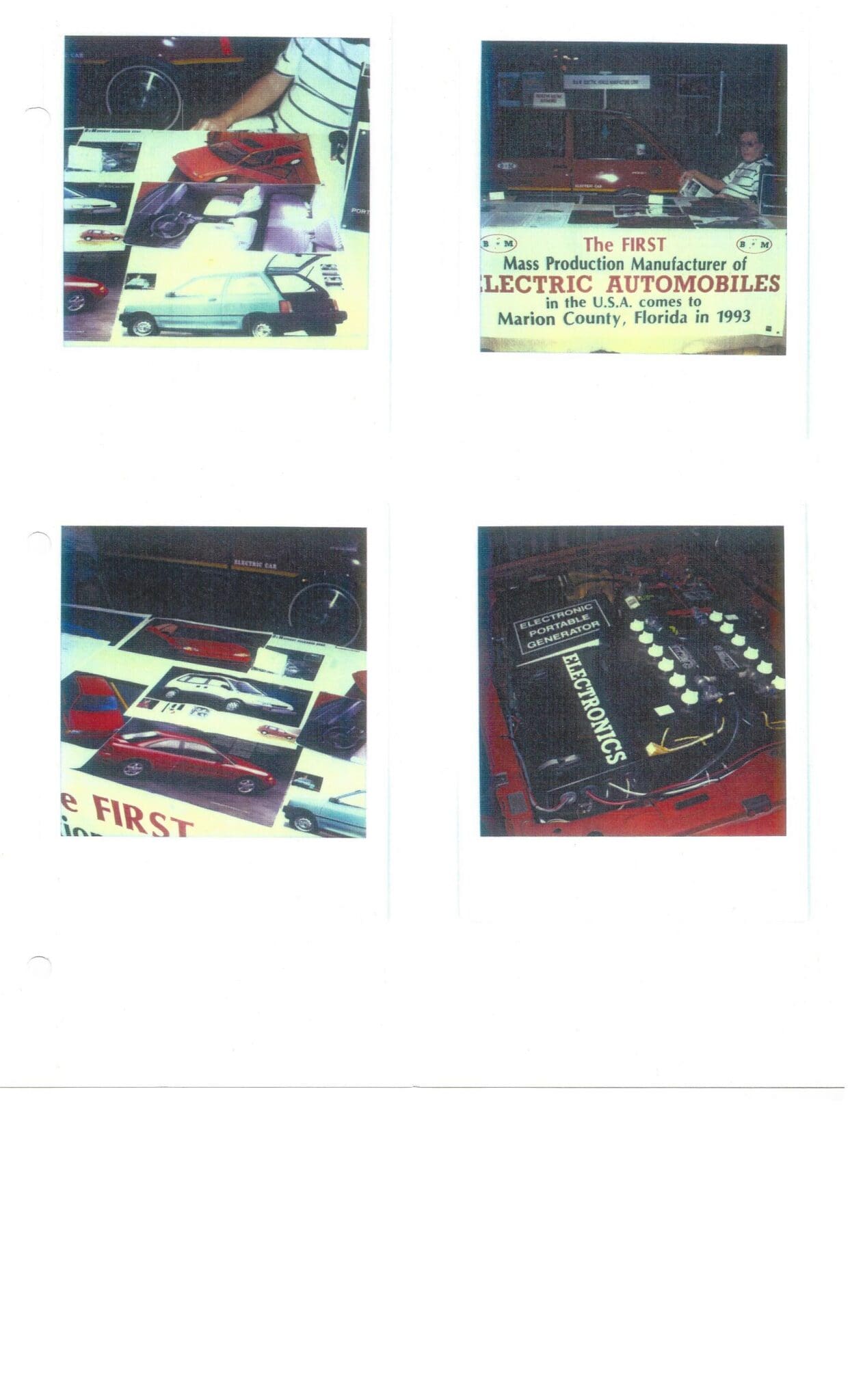
Mathes Electric Motorcar Corporation had larger plans than one or two demonstration vehicles. Company documents described a production program scheduled for August 1993 in Ocala, with three production models already completed at that time: two 1993 Ford Escorts and a 1993 Mitsubishi Mirage. The company projected that it could produce six cars per month in 1994 and discussed future manufacturing plans, including a major facility in Nevada for mass production for California and Mexico.
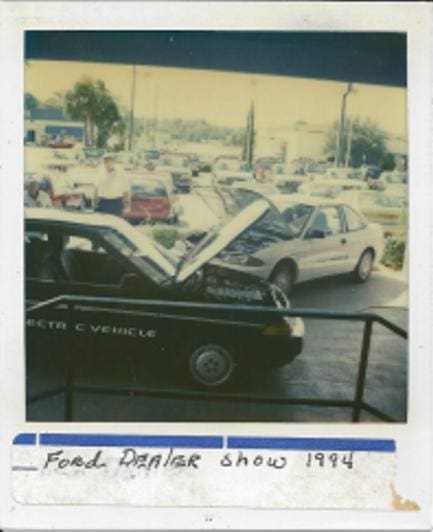
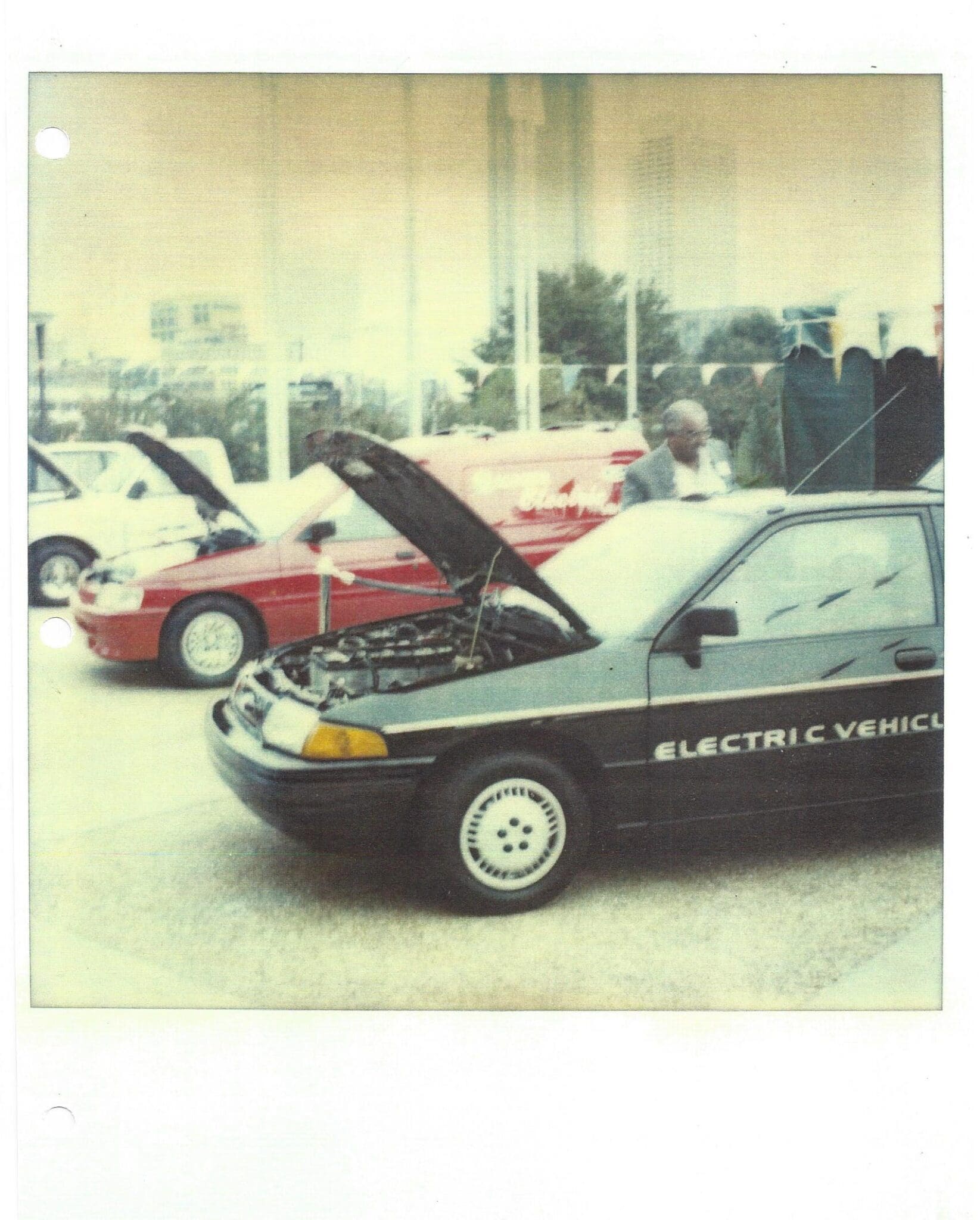
Newspaper coverage from the period shows that the cars attracted attention when displayed at dealerships and public events. One article described electric cars converted in Ocala generating interest in Gainesville, noting that the vehicles were presented as practical electric cars with lower maintenance demands than gasoline-powered cars. Another period advertisement promoted an Ocala Ford Motors presentation of the 1994 electric Escort wagon with the headline, “Helping To Make This World A Better Place To Live.”
Those materials show the optimism around the company. Mathes was not simply building a novelty. He was trying to create a real transportation product at a time when the marketplace, infrastructure, and technology were still catching up to the idea.
Why This Car Matters
Today, electric cars are no longer unusual. They are sold by major manufacturers, supported by charging networks, and discussed as part of the future of transportation. But vehicles like this 1994 Ford Aspire Electric remind us that the modern EV movement did not appear overnight. It was built on the work of inventors, mechanics, small companies, and early believers who experimented with electric transportation long before it was mainstream.
This Aspire represents one of those efforts. It tells the story of Barry Mathes and a small Florida company that saw potential in electric vehicles decades ago. It also preserves the kind of hands-on innovation that often gets overlooked in automotive history: people taking existing vehicles, solving practical problems, and trying to build something better with the tools and technology available to them.
Donated by the family of Barry Mathes, this 1994 Ford/Mathes Electric Aspire now has a permanent place in the story of Miles Through Time Automotive Museum. As number 10 of only 10 conversions completed by Mathes Electric Motorcar Corporation, it is a rare survivor from an early chapter of electric vehicle history and a reminder that the future of transportation has been imagined, tested, and pursued for a very long time.


You May Also Like These Exhibits

Our Newsletter
KEEP IN TOUCH
Sign up for our newsletter and be the first to know about upcoming events, promotions and get specials only for our subscribers!